
A breeder's guide to Bernese Mountain Dog health testing
Gentle, beautiful and gone too soon: the Berner's short lifespan is the breed's great sorrow. Health testing cannot fix that alone, but it removes several avoidable problems. This VerifiedStuds guide explains the tests the parent club lists and what we require for the Verified Health badge.
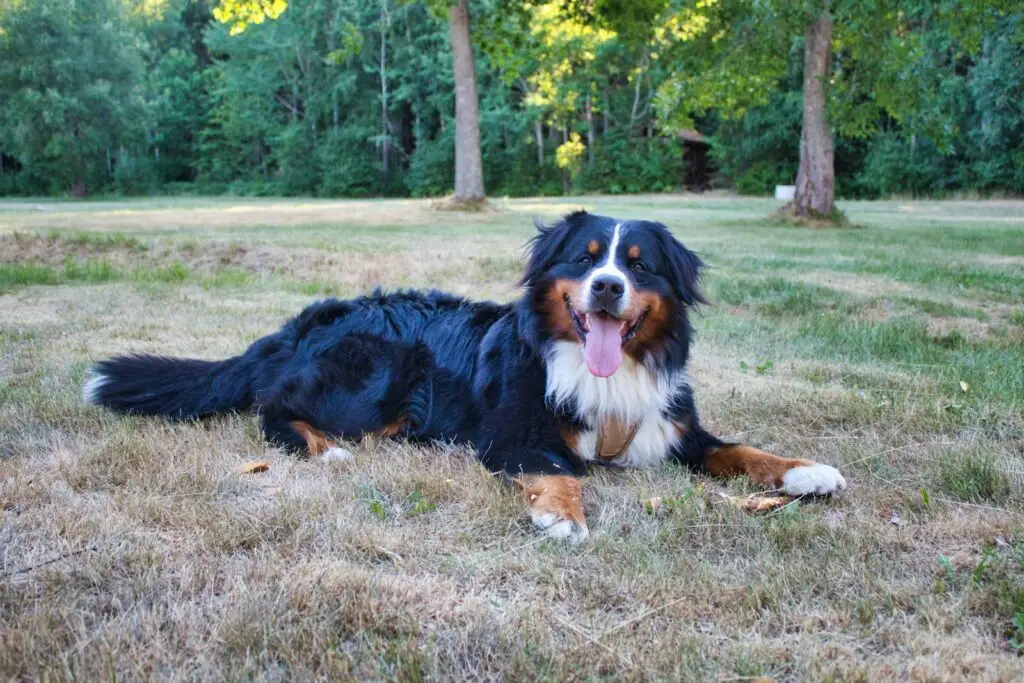
The Bernese Mountain Dog Club of America is the AKC parent club. Its list, as published by the AKC, has these items:
Clearance
Who does it
Earliest final result
Hips
X-rays sent to OFA, or PennHIP
24 months (OFA)
Elbows
X-rays sent to OFA
24 months
Heart
Cardiac exam, registered with OFA
12 months
Eyes
Board-certified veterinary ophthalmologist
Any age; valid 12 months
DM
Two DNA tests, for both known variants
Any age
AKC DNA profile
Cheek swab for parentage
Any age
Elbow dysplasia is especially common in the breed. Therefore, look at the elbow results of his parents and siblings as well as his own.
Degenerative myelopathy (DM): Berners have two different mutations in the same gene, so the list asks for both tests.
von Willebrand disease type 1 (vWD): a bleeding disorder that many breeders add.
Histiocytic sarcoma risk test: a pre-test that estimates inherited cancer risk. It guides pairings, but it is not a clearance.
Cancer causes about half of all Bernese deaths, and histiocytic sarcoma is the worst offender. No test can clear a dog. As a result, the most useful evidence is how long his relatives lived.
The club's open database, Berner-Garde, records health and age at death for thousands of dogs. So ask for the stud's Berner-Garde number and read his family's entries. A pedigree full of dogs that reached nine or ten is worth more than any single certificate.
In addition, bloat and cruciate ligament injuries occur in the breed, and neither has a screening test.
Brucellosis spreads through mating and has no reliable cure. Therefore, the AKC advises testing stud dogs every six months and females before each breeding. In addition, VerifiedStuds asks for a negative test before every booking. Read brucellosis in dogs for the details.
Ask for his registered name, then look up his results in the public OFA database.
Request both DM results on a lab report, and compare them with your female's.
Find out how long his parents and grandparents lived, and what they died of.
Check his Berner-Garde record for siblings and earlier puppies.
Next steps: Bernese Mountain Dog studs · Bernedoodle studs · Stud fee guide · Find a health-tested stud · List Your Stud
What health tests should a Bernese Mountain Dog have before breeding?
Hips, elbows, a cardiac exam, an eye exam and both DM DNA tests, plus a negative brucellosis test.
Why are there two DM tests for Berners?
The breed has two separate mutations in the SOD1 gene. Each needs its own test, and both affect risk.
Is there a cancer test for Bernese Mountain Dogs?
There is a risk pre-test for histiocytic sarcoma. However, it only estimates risk and cannot clear a dog.
What is Berner-Garde?
It is an open health database run for the breed. It lists test results, relatives and age at death.
What does VerifiedStuds require for Bernese studs?
Hips, elbows, heart and a current eye exam, with a negative brucellosis test, for the Verified Health badge. DNA results can be uploaded too.
Sources: Bernese Mountain Dog Club of America, Berner-Garde Foundation, AKC Working Group health testing requirements, OFA CHIC program.
The first 100 studs pay 0% commission on their first booking, and listing is free.