
Health-tested Papillon stud dogs, with size on every profile
Papillon means butterfly in French, and one look at the fringed, wing-shaped ears explains why. Behind the dainty looks is one of the smartest and most athletic toy breeds. So breeders want sires that are sound as well as pretty. VerifiedStuds shows each stud's test results, size and fee.
$500 to $1,500+
typical fee, while champion sires cost more
3 health tests
on the Papillon Club of America list
Natural, chilled, frozen
breeding methods

Papillon profiles are being added now. Because we are new, any tested male can still claim a free Founding Stud spot.
Founding Stud spot open
Give his height, weight and ear type, then his patella, heart, eye and DNA results.
Claim this spotFounding Stud spot open
Founding Studs pay 0% commission on their first booking, and listing is also free.
Claim this spotFounding Stud spot open
Short on time? Then send us the documents, and we will build the listing for you.
Claim this spotPapillon stud fees usually fall between $500 and $1,500. A health-tested male without titles often charges $500 to $1,000. However, AKC champions and agility or obedience titled sires commonly ask $1,500 to $2,500.
These are market estimates, as fees are private. Litters are small, typically two to four puppies. So read the terms for a repeat breeding with care. Our stud fee guide explains them.
$500 to $1,500+
Overall range: $500 to $2,500
Health-tested, untitled male: $500 to $1,000
Champion or performance-titled sire: $1,500 to $2,500
The Papillon Club of America sets three tests, which the AKC lists on its Toy Group health testing page. Owners upload these results for the Verified Health badge:
Test
What we accept
Patellas
Veterinary patellar luxation exam, registered with OFA
Heart
Cardiac exam registered with OFA
Eyes
Exam by a board-certified ophthalmologist (ACVO)
Brucellosis
Negative test taken before the breeding
DNA testing adds useful detail. For example, breeders screen for a form of progressive retinal atrophy and for neuroaxonal dystrophy (NAD), a fatal nerve disease in puppies. However, loose kneecaps are the most common physical fault, so the patella grade matters. Registered results can be checked on the OFA website.
For clear explanations of patella, heart and eye exams, see our health testing guides.
First, check his size and bone. The standard calls for 8 to 11 inches at the shoulder, and dogs over 12 inches are disqualified. Papillons are fine-boned, but they should never be frail. So ask for his height and his weight together.
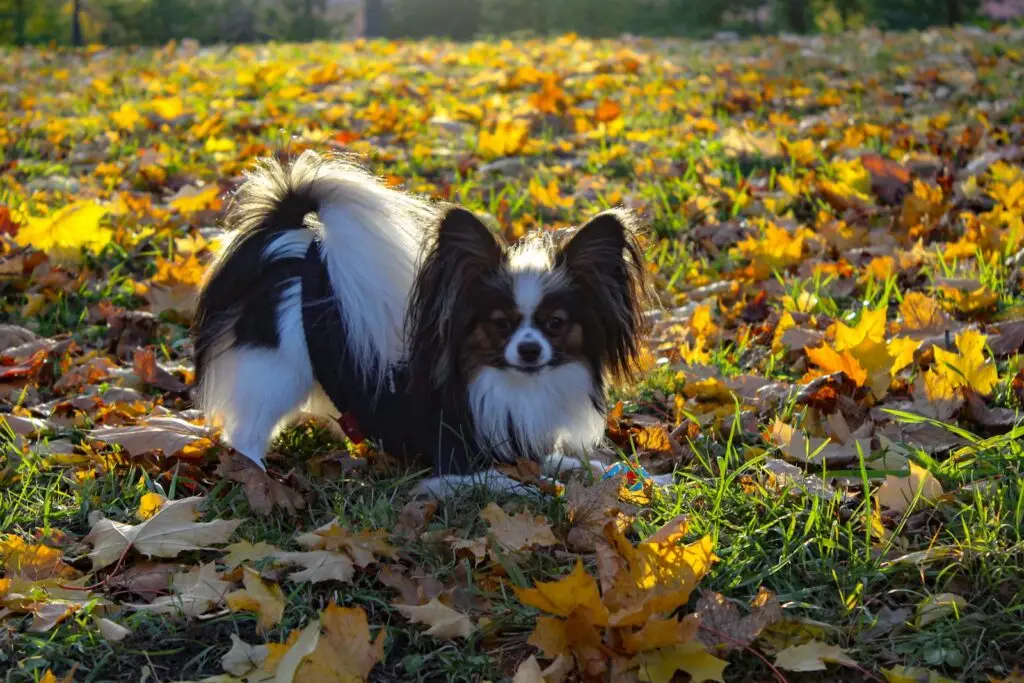
Next, look at the ears. Most Papillons have upright ears. The drop-eared type is called the Phalene, which means moth. Both can appear in one litter and are shown together in the AKC. However, ears that are half up and half down are a fault.
Finally, weigh brains and nerve. The Papillon tops the toy breeds in obedience and agility. A stud should be outgoing and steady, never shy or snappy. In addition, ask about his teeth, since small mouths lose teeth early.
The AKC describes the Papillon as friendly, alert and happy. Small spaniels of this type appear in European court paintings from the 1500s onward. Marie Antoinette is said to have kept them.
Papillons weigh only 5 to 10 pounds, yet they love long walks and learn tricks with ease. They also live a long time, often into their mid teens. As a result, a healthy sire shapes many years of a family's life.
Papillons usually mate naturally. However, when the female is tiny or the pair is inexperienced, artificial insemination by a vet is safer. Chilled semen is also an easy way to use a titled sire from another region. Each profile lists the methods on offer.
Read the dog artificial insemination guide for the steps. Then see how VerifiedStuds works.
1
First, shortlist studs and message owners through the site to agree on dates and terms.
2
Then book the stud and pay the listed fee by card at checkout.
3
After that, accept the breeding terms before the booking confirms.
4
Finally, the owner is paid through Stripe, and you can leave a verified review after the breeding.
Own a Papillon stud? List Your Stud free. The first 100 studs pay no commission on their first booking.
Also compare Miniature Schnauzer studs, Westie studs, Chihuahua studs and Pomeranian studs, or see every breed on our stud dogs by breed page. Planning his workload? Then read our guide to rest between breedings. Owners of every breed can list here.
How much is a Papillon stud fee?
Most owners charge $500 to $1,500. However, champions and performance-titled sires can ask up to $2,500.
What health tests should a Papillon stud have?
The parent club list covers patellas, heart and eyes. Breeders also use DNA tests for PRA and NAD. We require a negative brucellosis test too.
What is a Phalene?
It is the drop-eared variety of the Papillon. The name is French for moth, and it is the older of the two ear types.
How big should a Papillon stud be?
He should stand 8 to 11 inches tall. Most breeders choose a male that is no larger than the female, but ask your vet about your dogs.
Can other toy spaniels be listed?
Yes. Every breed is welcome on VerifiedStuds.
How do I list my Papillon at stud?
Create a free account, upload his health results and photos, and set your fee. Or ask our team to build the listing.
List him free while the 100 Founding Stud spots are open, or review typical fees first.