
Health-tested Bloodhound stud dogs from verified owners
No dog follows a scent like this one. The famous nose sits on a big, heavy frame, though, and that frame brings joint, heart and stomach risks. On VerifiedStuds, every owner is identity verified, and each profile shows health results beside the fee.
$600 to $1,500+
estimated fee, while proven trailing sires cost more
3 tests
hips, elbows and heart
Natural, AI, chilled
breeding methods
Bloodhound profiles are opening now. Meanwhile, owners of health-tested show and working males can claim a free Founding Stud spot.
Founding Stud spot open
Show his OFA hips, elbows and heart exam, along with any trailing or show titles.
Claim this spotFounding Stud spot open
Founding Studs pay 0% commission on their first booking, and listing is also free.
Claim this spotFounding Stud spot open
Short on time? Then send us the documents, and we will build the listing for you.
Claim this spotBloodhound stud fees usually run from $600 to $1,500. A health-tested male with no proven litters often asks $600 to $900. However, champions and proven man-trailing sires can ask $1,200 to $2,000.
These are market estimates, since fees are private. Police and search-and-rescue handlers pay most for working ability. The stud fee guide explains contracts and return services.
$600 to $1,500+
Overall range (estimate): $600 to $2,000
Health-tested, unproven male: $600 to $900
Champion or proven trailing sire: $1,200 to $2,000
The American Bloodhound Club is the AKC parent club. A stud can carry our Verified Health badge when the owner uploads the results on its recommended list:
Test
What we accept
Hips
OFA hip evaluation or PennHIP
Elbows
OFA elbow evaluation
Heart
Cardiac exam registered with OFA
Brucellosis
Negative test taken before the breeding
Bloat is the breed's biggest killer, and it has no screening test. Therefore, ask whether the stud or his close relatives have bloated. In addition, loose eyelids, ear infections and skin-fold trouble are common, so an eye exam is a sensible extra. A DNA test for degenerative myelopathy is available too. Registered results are public on the OFA website.
See our health testing guides for how each test works.
First, look at his eyes and skin. Heavy wrinkles and very loose lids look dramatic, yet they cause lifelong problems. So prefer a dog whose eyes are clean and comfortable, with enough skin for type but no more.
Next, ask what he can do. A Bloodhound should want to trail. Mantrailing titles, search work or even a keen nose on family walks all show that the instinct is intact.
Finally, ask about lifespan. The breed is not long-lived, and bloat and cancer take many dogs early. As a result, a pedigree with dogs that reached ten is valuable.
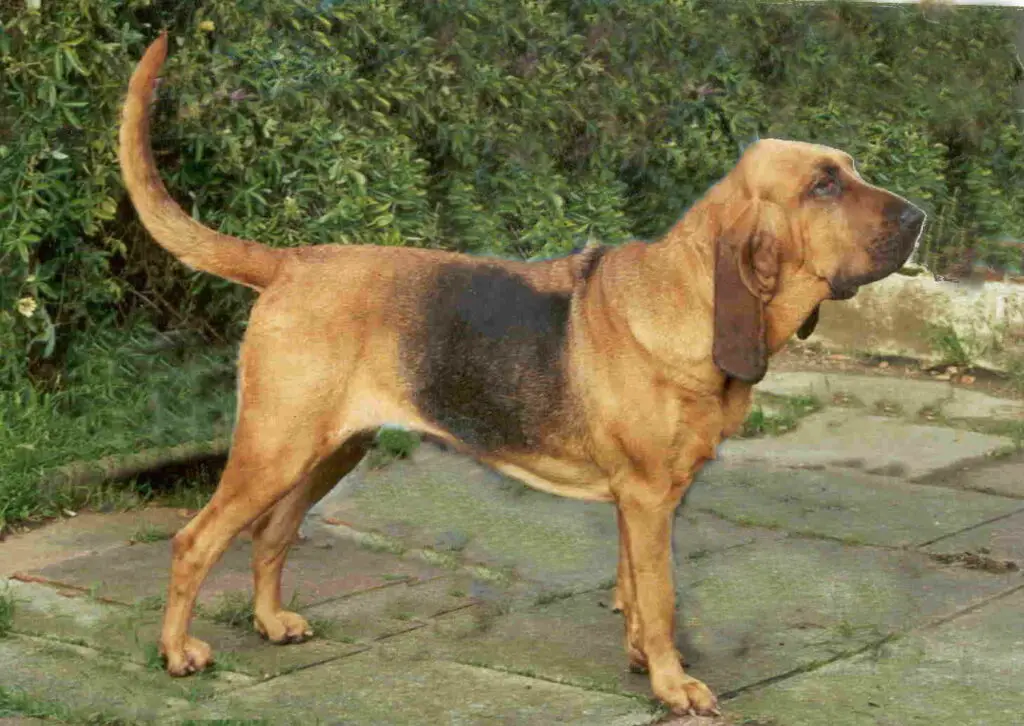
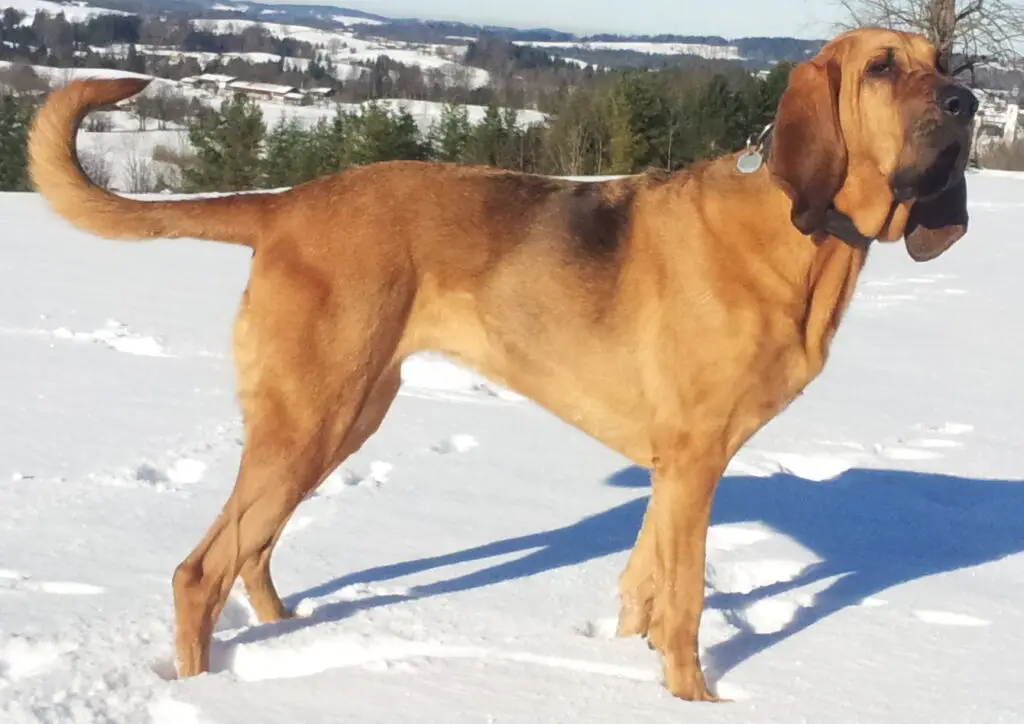
The Bloodhound descends from the hounds of the Abbey of Saint-Hubert in Belgium, bred more than a thousand years ago. Its name refers to "blooded", or pure-bred, hounds. The AKC describes the breed as friendly, independent and inquisitive. Males stand 25 to 27 inches and often weigh over 100 pounds.
At home, Bloodhounds are gentle and affectionate. However, they are stubborn on a scent, they drool, and they need secure fencing. Therefore, honest breeders tell buyers exactly what to expect.
Bloodhounds can breed naturally, although size and weight sometimes make help necessary. Therefore, artificial insemination is common. Chilled semen is used as well, because working handlers search widely for proven lines. Each profile lists the methods on offer.
The dog artificial insemination guide explains timing and shipping. Then see how VerifiedStuds works.
1
First, shortlist studs and message owners through the site to agree on dates and terms.
2
Then book the stud and pay the listed fee by card at checkout.
3
After that, accept the breeding terms before the booking confirms.
4
Finally, the owner is paid through Stripe, and you can leave a verified review after the breeding.
Own a Bloodhound stud? List Your Stud free. The first 100 studs pay no commission on their first booking.
Also compare Basset Hound studs, Beagle studs, Mastiff studs and Great Dane studs, or see every breed on our stud dogs by breed page. Planning his workload? Then read our guide to how often a stud can breed.
How much is a Bloodhound stud fee?
Most owners charge $600 to $1,500. However, champions and proven trailing sires can ask up to $2,000. These figures are estimates.
What health tests should a Bloodhound stud have?
Hips, elbows and a cardiac exam, plus a recent negative brucellosis test. An eye exam is a useful extra.
Is there a test for bloat in Bloodhounds?
No. Family history is the only guide, so ask whether close relatives have bloated.
At what age can a Bloodhound be used at stud?
Most breeders wait until two years, because OFA gives final hip and elbow ratings at 24 months.
How do I list my Bloodhound at stud?
Create a free account, upload his health results and photos, and set your fee. Or let our team build the listing.
List him free while the 100 Founding Stud spots are open, or compare typical fees first.