
A breeder's guide to Poodle health testing by size
Standard, Miniature and Toy are three sizes of one breed, but each has its own health list. That catches out many doodle breeders as well as Poodle owners. This VerifiedStuds guide sets out each list, and explains what we require for the Verified Health badge.
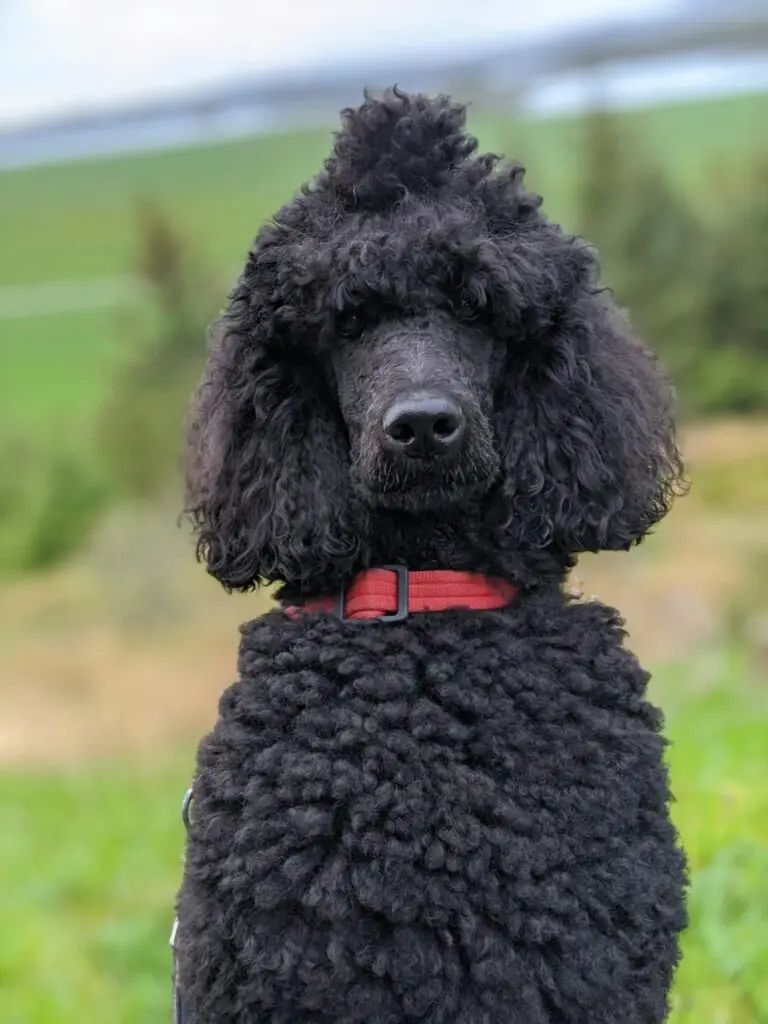
The Poodle Club of America is the AKC parent club. Its lists, as published by the AKC, differ by variety:
Variety
Exams
DNA tests
Standard
Hips, eye exam, thyroid evaluation
NEwS and vWD type 1
Miniature
Hips, patellas, eye exam
prcd-PRA
Toy
Patellas, eye exam
prcd-PRA
A vet x-rays the hips and sends the films to OFA, with final results at 24 months, or uses PennHIP. A board-certified ophthalmologist does the eye exam, which stays valid for 12 months.
prcd-PRA: progressive retinal atrophy, which causes blindness in Miniatures and Toys.
NEwS: neonatal encephalopathy with seizures, a fatal puppy disease in Standards.
vWD type 1: von Willebrand disease, a bleeding disorder.
DM and osteochondrodysplasia: often added, and the second matters most in Miniatures.
Since these are recessive, a carrier can be bred safely to a clear dog.
Standard Poodles are prone to sebaceous adenitis (SA), a skin disease that causes scaling and hair loss. A specialist screens for it with a skin punch biopsy, and many breeders repeat it. In addition, some add a cardiac exam.
Addison's disease and bloat also occur in the variety, and neither has a screening test. Therefore, family history matters. Ask what the stud's parents and siblings have suffered from, and how long they lived.
Brucellosis spreads through mating and has no reliable cure. Therefore, the AKC advises testing stud dogs every six months and females before each breeding. In addition, VerifiedStuds asks for a negative test before every booking. Read brucellosis in dogs for the details.
Ask for his registered variety, and his measured height, because the lists differ.
Look up his registered name in the public OFA database.
Request DNA results on a lab report. This matters doubly for doodle litters, where the other parent has a different list.
Check for SA, Addison's and bloat in his family if he is a Standard.
Next steps: Poodle studs · Goldendoodle studs · Stud fee guide · Find a health-tested stud · List Your Stud
What health tests should a Standard Poodle have before breeding?
Hips, an eye exam and a thyroid evaluation, with DNA tests for NEwS and vWD, plus a negative brucellosis test.
What tests do Miniature and Toy Poodles need?
Patellas, an eye exam and a prcd-PRA DNA test. Miniatures also have hips on their list.
What is sebaceous adenitis?
It is an inherited skin disease, mainly in Standards. A skin biopsy is the only way to screen for it.
Do Poodles used for doodle breeding need the same tests?
Yes. The puppies inherit Poodle risks whatever the other parent is, so the same list applies.
What does VerifiedStuds require for Poodle studs?
The exams on the list for his variety, with a negative brucellosis test, for the Verified Health badge. DNA results can be uploaded too.
Sources: Poodle Club of America, AKC Non-Sporting Group health testing requirements, AKC Toy Group health testing requirements, OFA CHIC program.
The first 100 studs pay 0% commission on their first booking, and listing is free.